
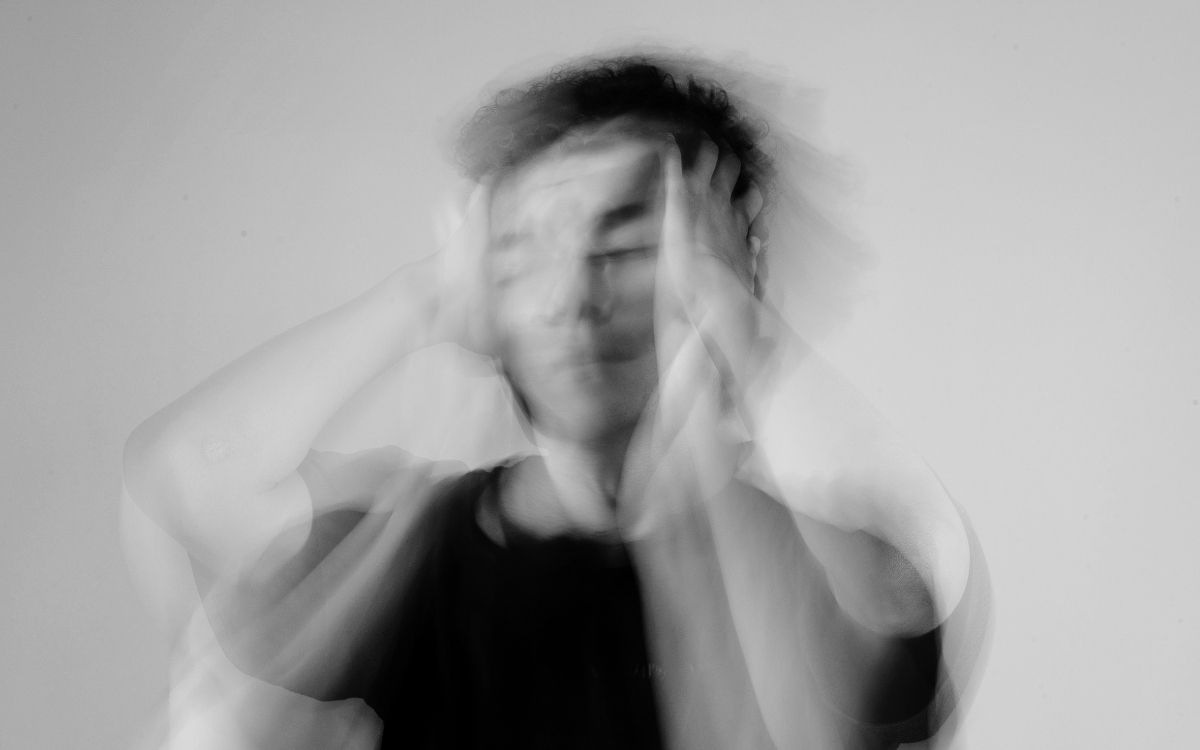
Have you ever tried to explain loneliness out loud and watched the sentence fall apart halfway through?
It's a strange feeling to describe accurately. Not quite sadness, not quite boredom, closer to a low static that sits underneath everything else and refuses to resolve into a clean answer when someone asks what's wrong. Talk therapy assumes a feeling can eventually be put into words. Some feelings, loneliness high among them, seem to actively resist that translation, no matter how patiently anyone asks.
That's where handing someone something to make instead of something to say tends to work differently. Not better, necessarily. Differently, in a way that reaches a part of the feeling language keeps missing.
Have You Tried Any of These?
Have you ever tried photo therapy, just sitting with an old photograph and letting whatever it stirs up actually surface, instead of trying to explain the feeling first? It has a strange way of getting somewhere a direct question never does, because you're not being asked to describe the loneliness, you're just being asked to look at a picture and notice what happens in your chest.
What about music? Not performing it, just choosing a piece that matches whatever's sitting in you and actually staying with it, rather than reaching for the next distraction. There's something almost unfair about how quickly the right song can locate a feeling that a whole conversation couldn't pin down.
Or clay, working it with your hands until it holds a shape you didn't consciously plan. There's a reason working three-dimensionally shows up again and again in this field: a shape in your hands is harder to intellectualise your way around than a sentence is. You can't perform composure with wet clay the way you can with careful words.
Or collage, cutting and placing fragments of other images until they add up to something that wasn't there before. Loneliness often feels like several disconnected pieces that refuse to form a coherent story. Collage doesn't ask you to resolve that. It just asks you to arrange it.
None of these require talent. That's rather the point. Nobody's grading the clay.
Now Take the Room Away
All of that assumes a shared table, materials passed back and forth, a therapist close enough to notice a hand hesitate. Take the room away entirely, replace it with a video call, and the question changes: does any of this still work through a screen?
Mostly, yes, and in some cases the version that got improvised digitally works differently rather than worse. Drawing and painting move to a tablet without losing much. Collage arguably gets easier, since the entire internet is now the magazine drawer. Music holds up almost perfectly, since listening was always solitary anyway. Clay is the honest exception, the one modality that genuinely loses something physical no digital substitute quite replaces, and worth naming rather than glossing over.
Building Trust Through a Rectangle
What doesn't automatically survive the move online is something harder to name: presence. A chair angled toward you, a pause held a beat longer because someone is actually listening, none of that transfers through a laptop camera by default. Practitioners working this way had to start deliberately engineering what a room used to provide for free, camera height set just below eye level rather than looking down, a background chosen on purpose, framing kept consistent from one week to the next so a young client logging on gets a small, repeatable ritual out of it rather than a slightly different setup every time.
That last part is worth adding as a standing habit rather than an afterthought: consistency itself becomes a form of safety when nothing else about the space is fixed. After all, loneliness rarely needs the right words to start easing. It usually just needs something to do with your hands while somebody stays.
Written Down, Not Left to Chance
None of this stayed scattered across individual practitioners improvising alone. A guide developed inside the ARTY project, co-funded by the European Union under the Erasmus+ programme, built by partners across Greece, Italy, Spain, Cyprus, and Romania and peer-reviewed for its arts expertise by a partner in the UK, was written specifically for the period when loneliness among young people spiked and the rooms meant to hold it had all closed at once. It walks through the different art forms worth trying, which ones translate well to a screen and which don't, and how to rebuild the sense of presence a room used to provide without anyone having to think about it.
If you've found your own way to reach someone through a screen, get in touch. We'd like to hear what worked.