
What happens when two generations sit at the same table and begin to talk about the places they call home?
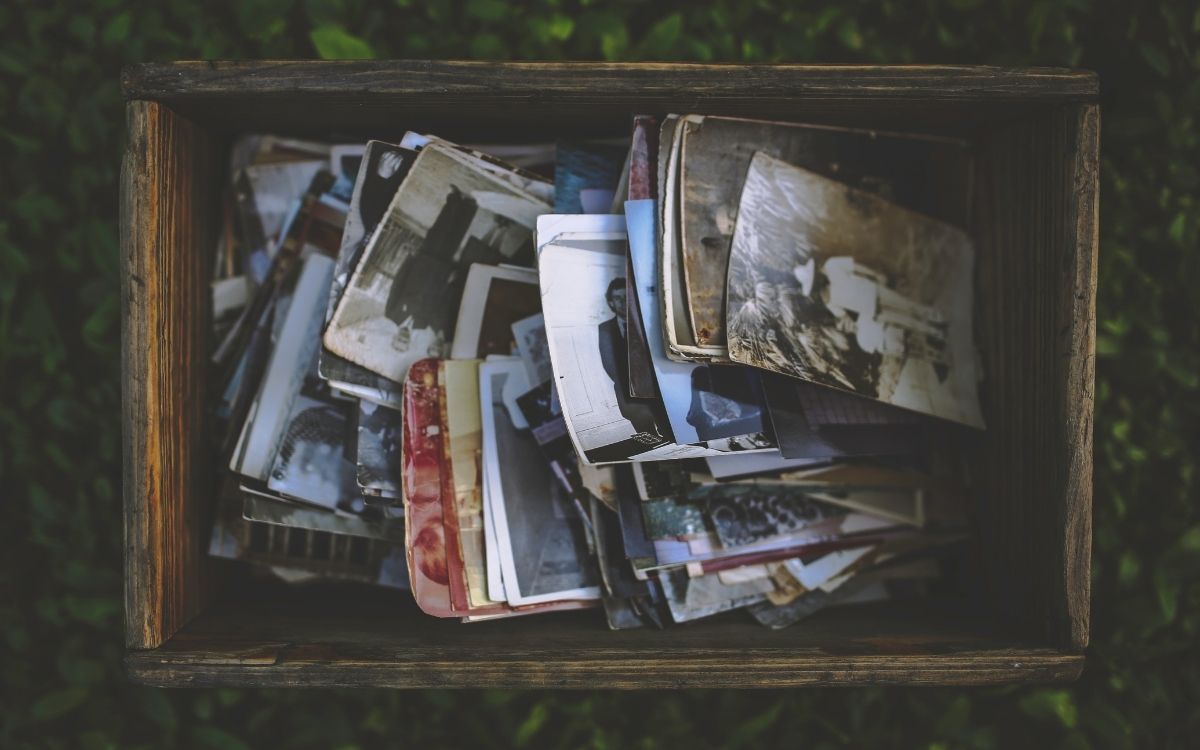
At first, it may seem like a simple conversation. A student asks a question. An older person remembers a street, a shop, a celebration, a habit from another time. Someone brings an old photograph, a small object kept for decades, a handwritten note, or a personal belonging that carries a story bigger than itself. And slowly, something meaningful begins to happen. Memories become bridges.
Imagine a space where this kind of exchange could happen intentionally, where young people and older adults come together not by chance, but with a shared purpose. Through storytelling, dialogue, and collaborative activities, they could explore how local cultural heritage lives not only in buildings and streets, but also in people's memories. In the way someone describes a market that no longer exists. In the name of a neighbor long gone. In a recipe passed from one kitchen to another without ever being written down. Local cultural heritage, in this sense, is not a fixed thing displayed behind glass. It is living, breathing, and deeply personal and to begin to understand it, you have to ask the people who carry it.
The Neighbourhood Then and Now
And those people have a great deal to say. Consider what a neighborhood holds across time. The same corner may have been a bakery, then a pharmacy, then nothing at all. A square that today fills with tourists or traffic may once have been the beating heart of a community, the place where news traveled, where children played until dark, where generations of families marked their celebrations. A young person walking through that space today has no reason to know any of this unless someone tells them. And that someone is still there, carrying the memory, waiting, often without knowing it, for the right question.
This is the quiet power of shared cultural memory. It is not the memory of one person alone, but the overlapping recollections of many, each slightly different, each adding a detail the others had forgotten. When older adults gather and begin to speak about the same neighborhood, the same street, the same decade, something remarkable happens: their individual memories begin to form a collective portrait. A community rediscovers itself. And when younger people are present for that process, they inherit not just information, but a sense of continuity; a feeling that they are part of something longer than their own lifetime.
Objects That Carry a World Inside Them
That sense of continuity becomes even more powerful when it takes physical form. Meaningful objects play a special role in this kind of exchange. An old key, a faded theatre ticket, a hand-embroidered cloth, a photograph taken in front of a building that no longer stands, these are not simply personal keepsakes. They are entry points into shared cultural memory. Each object tells a story that reaches beyond the individual who kept it, speaking of a time, a place, a way of living that once belonged to an entire community. When these objects are placed in front of younger eyes, the past stops being abstract. It becomes tangible, textured, and real.
What Each Generation Gives and Receives
It is in these moments, around a table, over an object, in the middle of a story, that both generations discover what the other has to offer. For younger participants, such a space would be an opportunity to see familiar places with completely new eyes, while gaining something equally valuable: the experience of truly listening. In a world that often moves quickly and communicates in short messages, sitting with an older person and following the thread of a long memory builds patience, empathy, and genuine curiosity. For older adults, it would offer the chance to be heard, to share objects and stories and know that someone is genuinely listening. It offers not just the joy of sharing, but a sense of belonging and relevance that pushes back against the isolation that so many older adults quietly face.
Why This Exchange Matters
What emerges from all of this is something larger than any single conversation. And perhaps this is where the real importance of intergenerational cooperation reveals itself. We often speak about generations as if they are separated worlds, but in reality, they shape one another constantly. Young people bring curiosity, energy, and new ways of seeing. Older generations carry lived experience, memory, and stories that risk disappearing if they are not shared. A neighborhood is never just what it looks like today; it is everything it has ever been, layered underneath the surface, waiting to be uncovered. Cultural heritage is alive, changing with every generation while still holding traces of those who came before. A community that makes space for this kind of exchange becomes richer because of it.
From Vision to Reality:
This is precisely what happened under the recent intergenerational workshop, under the framework of the LEGENDS project (2025-1-IT02-KA220-ADU-000352101), an initiative co-funded by the Erasmus+, dedicated to promoting intergenerational dialogue, local cultural heritage, and community connection across participating regions.
Young people and older adults sat together, brought meaningful objects to the table, and shared their memories of the same neighborhood across different decades, showing that cultural heritage does not live only in museums or archives; it lives in people, in conversation, and in the relationships that form when generations truly meet.