
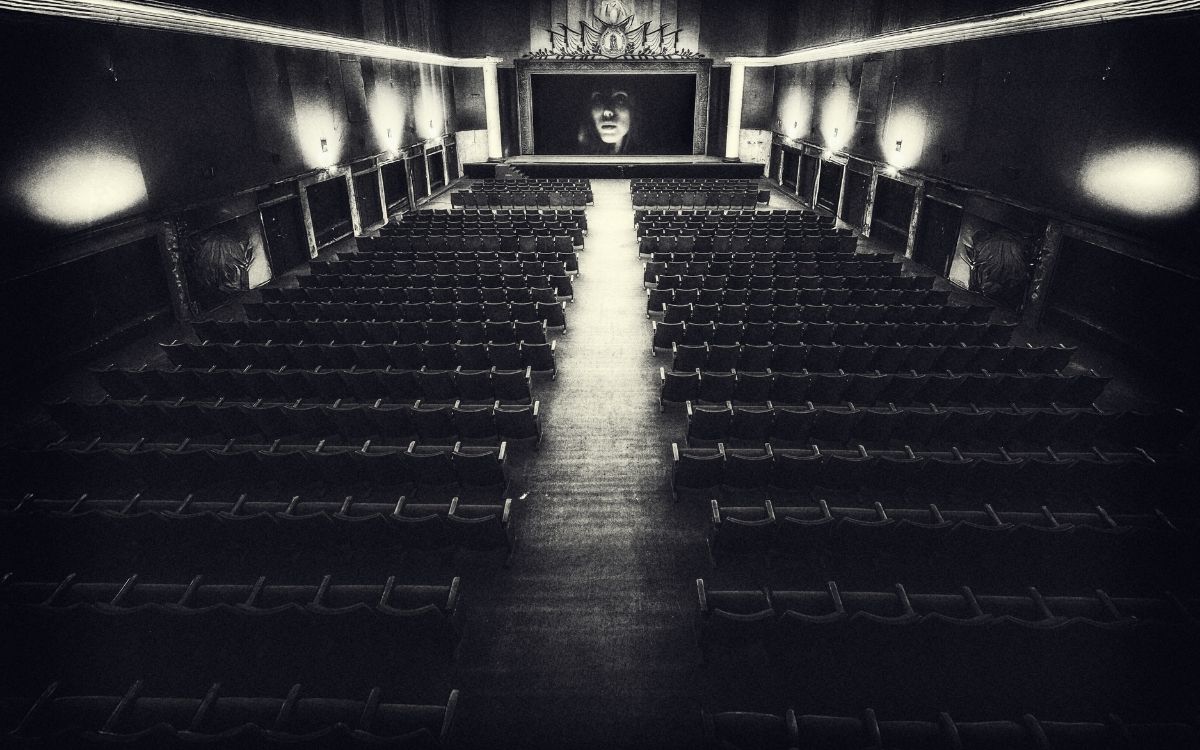
If you had a stage and a microphone right now, what would you actually say?
Most people, handed that kind of permission, don't stay quiet for long. Everyone's got something: a family argument nobody resolved, a friendship that quietly ended somewhere during lockdown and never restarted, a low hum of dread about the weather that gets pushed down most days because there's nowhere sanctioned to put it. Give someone a stage and a real audience and it turns out the material was never the hard part. People have always had something to say. What they've lacked, more often, is somewhere to say it.
For a couple of years, that somewhere disappeared almost entirely. Theatres shut, then reopened in fits and starts, then lost the audiences who'd gotten used to not going out. The actors, technicians, and writers who make theatre happen didn't stop having things to say. They just lost the room to say it in, and a room is not a small thing to lose.
Now Take the Room Away Again
Here's the twist. Say you get the stage and the microphone back, except it isn't actually a stage. It's a login link. A grainy webcam. A "you are now muted" notification at the exact moment you meant to deliver the line that mattered most. Most of what makes a live performance work, the shared breath of a room, the pause a performer can feel land before they move on, simply isn't there anymore.
A lot of people's first instinct, faced with that, is to just point a camera at the old thing and hope enough survives the translation. It rarely does. A play filmed for a screen still behaves like a play built for a room, and audiences can feel the seams even when they can't name them.
The harder, better question is different: if the stage is genuinely gone and all that's left is a rectangle on a laptop, what would you actually build for that instead? Not a recording of the old thing. A new thing, native to the link rather than apologising for it.
Someone Still Has to Answer
Picture a performer, call her Sofia, staring at her laptop camera the way she used to look out at a dark auditorium, except there's no laughter drifting back, no rustle of a few hundred people shifting in their seats.
"I kept performing to a black rectangle," she says, "and having to trust that someone, somewhere, was actually still there."
That trust, it turns out, is most of what a digital stage asks of a performer that a physical one never had to.
Someone still had to decide what to say into that rectangle, though, and the answers weren't small. Grief that never got a proper room to land in. A family relationship strained past the point either side knew how to fix. The particular, quiet exhaustion of watching the world get hotter while being told, gently, to stay calm about it. None of it needed a real stage to be worth saying. It just needed somewhere that would actually hold it.
Not Hypothetical, Not Anymore
This wasn't a thought experiment. Working teams across five countries were asked exactly this question inside the Digital Theatre project: no physical stage, no filmed-play workaround, just a genuinely digital space, and total freedom over what to put into it. Five entirely separate pieces came back, on five entirely different subjects, built for screens rather than salvaged for them.
The stage never really vanished. It just moved somewhere nobody had fully figured out how to use yet, and somebody had to go first. In fact, a microphone doesn't need a stage underneath it to matter. It just needs someone willing to still speak into it.
This work is part of the Digital Theatre project, co-funded by the European Union under the Erasmus+ programme, supporting theatre professionals and non-professionals in transitioning their craft into digital formats.
If you've had to find a new kind of stage yourself, get in touch, we'd like to hear what you built instead.