
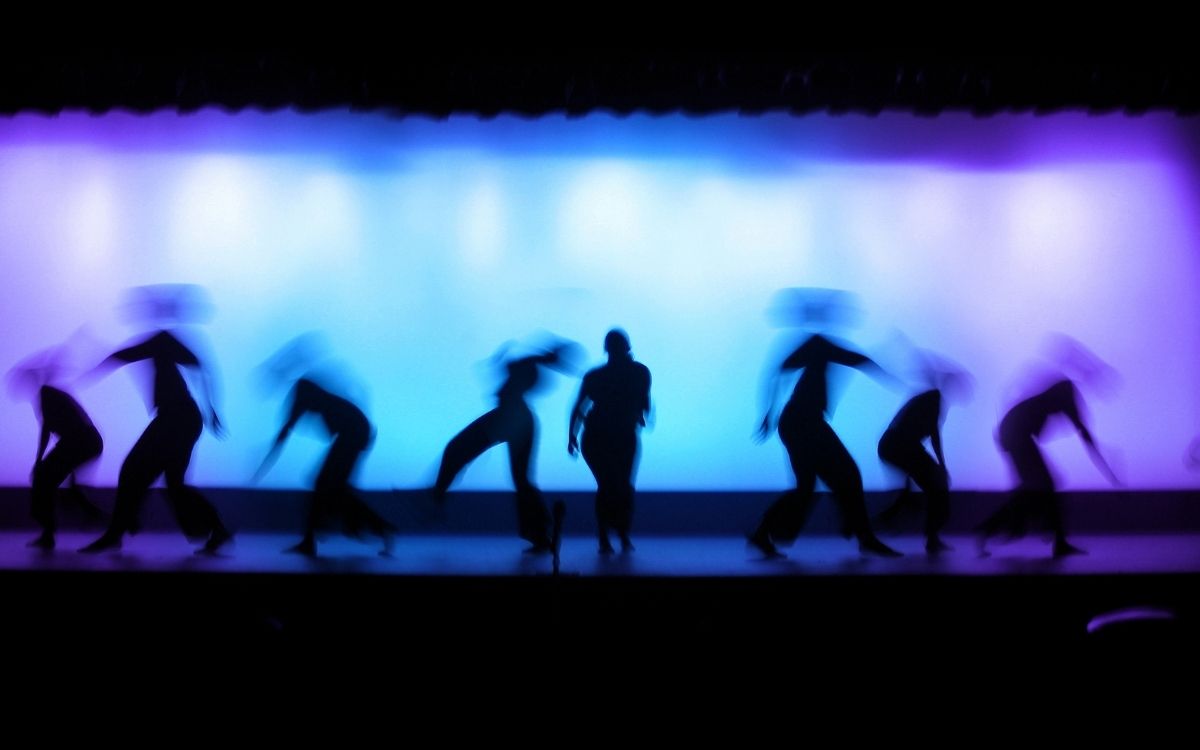
What if the unfinished stage of a creative process were the actual teaching material?
Not the polished result, but the sketch, the half-worked-out choreography, the scene that hasn't found its ending yet, the part every artist usually works through alone before anyone else sees it.
But can you actually teach a process that doesn't have a fixed lesson plan? Most training says no, you need a curriculum, a set of skills, a beginning and an end. It's easier to fund, easier to evaluate, easier to write up afterward. There's a different premise worth taking seriously: that the value isn't in the skill being taught, but in the act of making something alongside other people, with all the uncertainty that involves.
A Process, Not a Lesson
Turning a private way of working into something a school in one country, or a community group with a completely different set of participants, can actually pick up and use is a genuinely hard problem. It means finding the underlying principles, how creative uncertainty gets shared, how feedback moves between the person leading and the people taking part, how a process stays open without turning shapeless and separating those from wherever they first happened to appear.
That groundwork didn't start with a whiteboard. It started with listening: looking at what had already been tried elsewhere in Europe, including the parts that quietly failed, and asking young people, local organisers, and artists across several countries a few unglamorous questions: what do you actually need, what's kept you out of creative spaces before, what would make this time different.
Giving It a Shape
What came out of that listening wasn't a script. It was a small set of principles flexible enough to be rebuilt locally by whoever picks them up next. Five of them do most of the work, and together they spell something worth remembering mid-session, that in ARTIT we call "SHAPE".
Space treats the room itself as material — a courtyard, a public square, a school hallway — so the work stays visibly tied to a place people actually live in, rather than staged somewhere separate from daily life.
Hands and body puts physical movement and gesture on equal footing with words, which matters enormously when not everyone in the room shares a language.
Adaptation means no fixed format gets handed down whole; a session gets shaped around whoever's actually in front of you, not the group it was originally designed for.
Participation treats everyone in the room as a collaborator rather than a subject, nobody is there to be helped or fixed, and nothing is forced.
Evaluation closes the loop, checking honestly whether what was meant to happen actually did, and adjusting rather than declaring success by default.
None of these five is complicated on its own. What's harder is holding all five at once, in a room that doesn't always cooperate.
Two Threads, One Body
Two of those pieces carry more weight than the others in practice. The body, first, a way of communicating that doesn't depend on language fluency or academic literacy, which turns out to matter enormously with migrant and refugee participants who might otherwise sit out a conversation-heavy session entirely. And the physical space, second, using architecture- a square, a courtyard as material for the work itself, so a creative act stays visibly rooted in a specific community rather than floating free of it. A third, quieter thread runs underneath both: an attempt to let the arts, the humanities, and environmental thinking sit in the same room instead of staying in separate disciplines that happen to share a building.
Where This Started
All of this traces back to one choreographer's working method, developed over years in Seville, long before anyone thought to write it down for use elsewhere, loosely indebted to artists who spent their careers arguing that everyone carries creative potential, whether or not they've ever been trained to use it.
Getting from one person's practice to something transferable took real groundwork: reviewing existing case studies from across Europe, running focus groups with roughly forty people split between young participants and the organisations working alongside them in four countries, and a shared online session where practitioners compared notes directly. What came out the other end is now known as the CREATE Social Intervention Framework, published openly, meant to be picked apart and rebuilt by whoever uses it next. After all, a methodology is only as good as its second use, the one that happens after the person who first shaped it has moved on. Whether this one holds up outside where it started is the real test, and it begins the moment it's handed to someone else.
This work is part of CREATE, co-funded by the European Union under the Creative Europe programme, developing a transferable methodology for embedding artistic creation into social inclusion work with young people from disadvantaged backgrounds.
If you're adapting a creative methodology for your own context, get in touch, always worth comparing what held up and what didn't.