
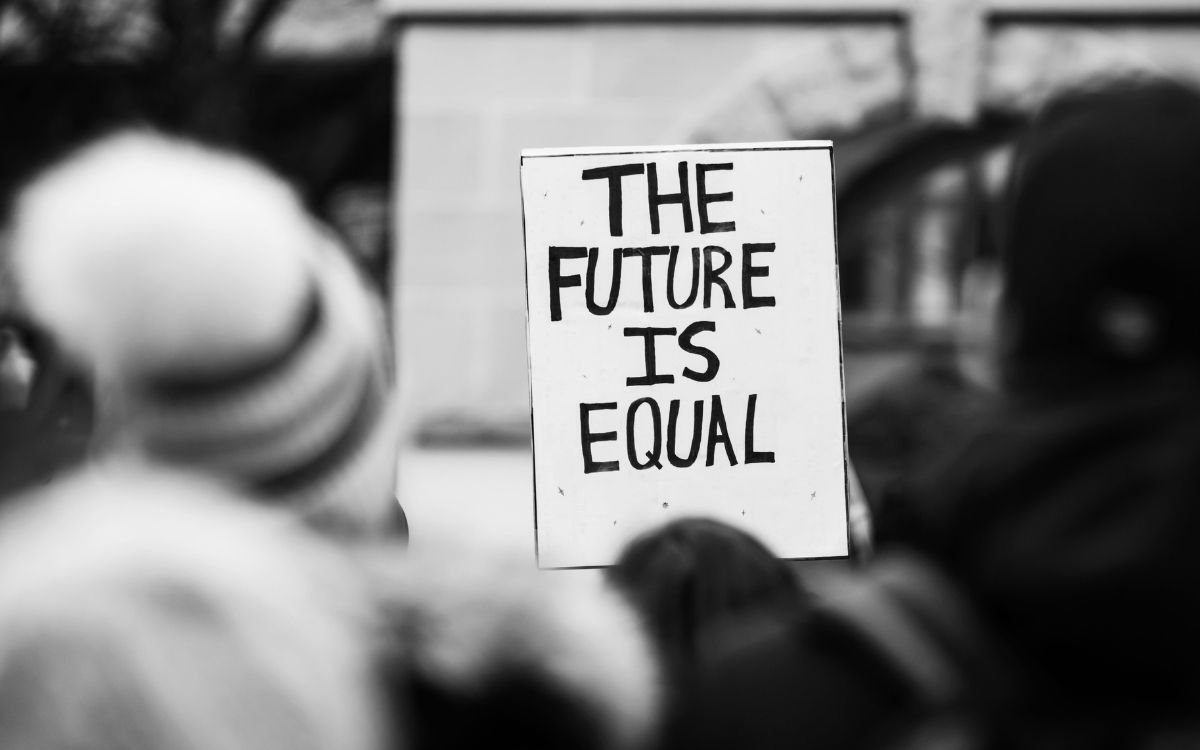
Who actually gets a say in what counts as culture?
Not who's allowed to buy a ticket or sit in the audience, but who's in the room when someone decides what gets made in the first place. It's a smaller question than it sounds, and most cultural institutions still haven't really answered it.
A Right Written After a War
Article 27 of the Universal Declaration of Human Rights was drafted in 1948, three years after a war that had used culture as propaganda and, for entire populations, denied it outright. The assumption behind the article was that culture heals and binds people back together, and that everyone should be free to take part in it.
What the article doesn't quite say is what taking part actually means. Being let into a room is not the same as being trusted to help decide what happens inside it. Most cultural policy since 1948 has focused on the first half of that sentence, accessibility, subsidised tickets, ramps, translated programmes and left the second half largely untouched.
The Distance Between Invited and Included
That gap shows up clearly in who actually engages with culture and who doesn't. People with disabilities are markedly less likely to have ever been to the cinema, a live performance, or a museum than people without. Migrants and people from ethnic minority backgrounds carry their own layers of exclusion, some practical, cost, language, distance and some harder to name: not feeling like a given space was built with them in mind.
None of this is new, and none of it is really about access in the narrow sense. A wheelchair ramp doesn't change who gets asked what the exhibition should be about. A subtitled programme doesn't change who's on stage. Closing the gap between attending and shaping culture takes something more deliberate than removing physical barriers.
A Different Starting Point
A handful of programs across Europe have started testing the same idea: rather than designing cultural activities for young people with disabilities, migrant backgrounds, or belonging to ethnic minorities, involve them in the artistic process itself. Not as an audience being served, but as collaborators shaping something that doesn't yet exist.
The premise is simple to state and harder to act on. It's currently being tried out with young people aged 16 to 25 across four cities in southern and northern Europe, different languages, different local histories, the same basic question underneath: what happens once you stop treating people as the audience for someone else's work.
Not Passive, Not Waiting
That distinction matters more than it sounds. A workshop that teaches a fixed skill treats participation as something to consume. A creative process, open-ended, unresolved, made alongside working artists, treats participation as something to shape. The young people involved aren't handed a finished cultural product; they're in the room while decisions are still being made about what the thing will become.
It asks something of the artists too. Rather than delivering a lesson plan, they're expected to work responsively, letting feedback from participants steer where a piece goes. It's slower and less predictable than a standard workshop, and it puts real weight on the relationship between artist and participant rather than on the finished piece alone.
Which Is How This Became CREATE
All of the above is what shaped CREATE, a program running across Seville, Palermo, Vilnius and Athens. None of it happens on its own. Municipal cultural institutes, community organisations, migrant support centres, schools and universities across the four countries are involved, offering both expertise and access to the communities the work hopes to reach. Their involvement is less about ticking a box on outreach and more about making sure the work doesn't disappear the moment the funding period ends, the harder, less visible test any project like this eventually faces.
There's a smaller, quieter idea underneath all of it too. Artists often spend months, sometimes years, on a creative process that gets shown once, if at all; most of what happens along the way, the false starts, the conversations, the discoveries that don't make the final cut, never reaches an audience. This work treats that discarded material as the actual point. The process, not just the finished piece, is where the social value tends to live.
The right to participate in cultural life was never meant to stop at the door of the auditorium. What this project is testing, city by city, is whether that right can extend into the process of making the work itself and what changes, for everyone involved, when it does.
CREATE, co-funded by the European Union under the Creative Europe programme, supports the use of artistic creation as a tool for the social inclusion of young people with disabilities, migrant backgrounds, and ethnic minority backgrounds across Spain, Italy, Lithuania and Greece.