
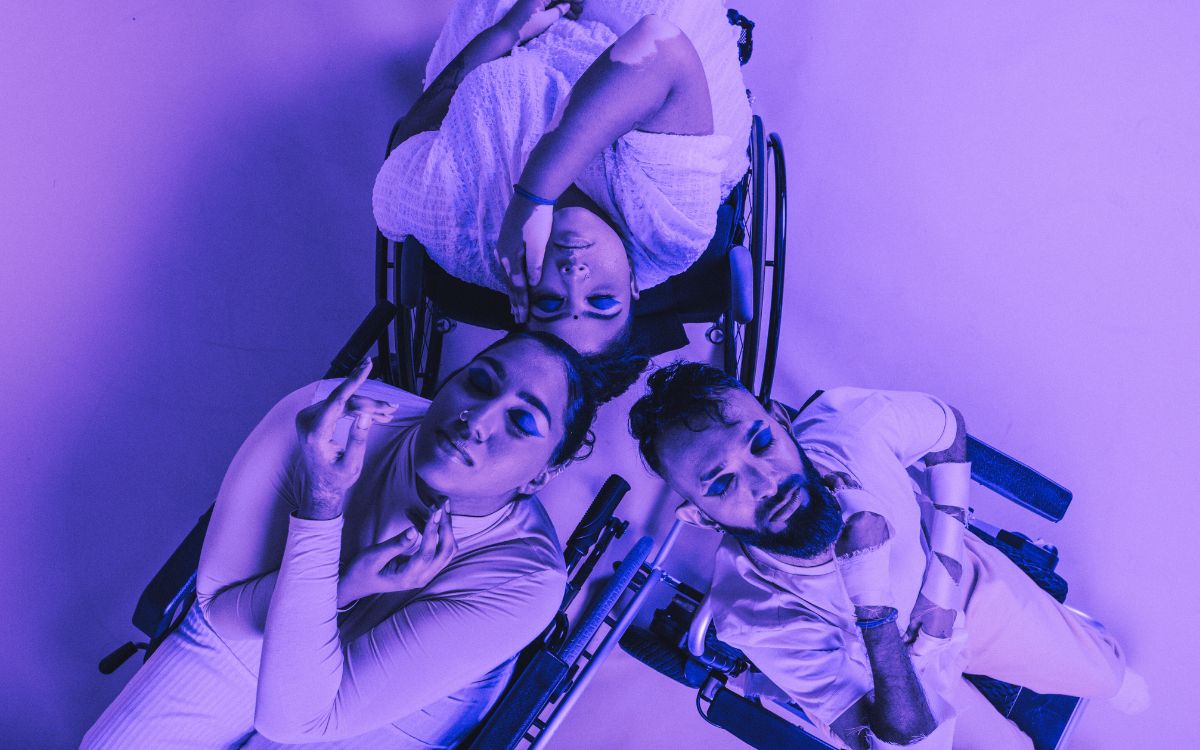
What does progress on accessibility actually look like when you put it in a room and ask people to be honest about it?
That's the question that shaped a recent evening in Athens, where artists, researchers, educators, and cultural professionals gathered to talk not about ideals, but about what's actually working, and what still isn't, when it comes to including young people with intellectual disabilities in cultural life.
A Room Built for Cross-Sector Dialogue
The event, "Artistic Minds: Art as a Therapeutic Medium and the Power of Personal Expression," took place on Thursday, May 9, 2025, at WHEN hub in Athens. It brought together people who don't always end up in the same conversation: art therapists, public health researchers, special education practitioners, and cultural sector professionals, all working from different angles on the same underlying question of who gets to participate in the arts, and how.
Sharing What Actually Works
The evening opened with a presentation of the Artistic Minds project, a Creative Europe initiative focused on the creative empowerment of young people with intellectual disabilities through partnerships with cultural institutions. Anaïs Roussou, representing ARTIT, and Anthi Dautaki from MARGARITA, the event's organizers, shared concrete examples from their own work, cases where artistic inclusion had moved beyond good intentions into practice.
The discussion that followed, "Creating Spaces: Reinventing Access to Culture," brought the harder questions into the room. Art therapist Chrysoula Plakioti, Professor Vasilis Margaritis of KMOP, and Marina Kallergi, Team Coordinator at MARGARITA, discussed where institutional change is genuinely happening, and where it's stalling. The conversation kept returning to a practical question: what does it take for accessibility to be built into a cultural institution, rather than added on as an afterthought?
Where Greece Stands Right Now
By the end of the evening, one question hung over the room: where does Greece actually stand on accessibility and participation for young artists with disabilities?
The honest answer is: somewhere in between. There's real momentum, grant schemes from the Ministry of Culture, and initiatives from organizations like Onassis Stegi, ARTogether, and liminal that are pushing things forward. But the gaps are still significant. Institutional guidelines remain vague or non-binding, and cultural infrastructure, from physical spaces to staff training, is still far from meeting basic accessibility standards.
From Access to Participation
What Greece needs now isn't more access in the narrow sense, it's a systematic strategy that treats participation and representation as the goal, not just entry. That means young people with disabilities present not only as participants in creative processes, but in leadership roles and cultural policymaking too.
Evenings like this one are a reminder of what's at stake. Art isn't a privilege for the few; it's something everyone has a claim to. When cultural spaces are built with that in mind, they don't just become more accessible. They become better.
This event was organized as part of the Artistic Minds Project (101173645), co-funded by the Creative Europe Programme of the European Union, supporting the creative empowerment of young people with intellectual disabilities.
If your organization is working on similar questions, or you'd like to share what's working (or not) in your own context, get in touch; this is a conversation Greece's cultural sector needs to keep having.